
Okomfo Nana Afua,a famous Winti Priestess from Suriname
“Winti” refers to both a religion and a few of the supernatural beings revered by the descendents of Suriname Maroons. The Vodun of Benin, Yoruba of Nigeria, and Akan,Ghana traditional religious traditions of West Africa are among those with whom it has origins. Wintis are a distinctive pantheon of lesser gods divided into four categories: Earth, Water, Air, and the Bush. Wintis believe in the Supreme Creator, Anana Kedyaman Kedyanpon, as well as the Wintis. Some of the most revered Wintis include Mama Aisa (The Goddess of the Earth), Fodu/Serpent God (also known as Papa Winti), Leba (A cleansing spirit who dwells particularly at traffic intersections/crossroads), Opete Kumanti (The principal Winti of the air), and Ingi (an Amerindian spirit).

During Winti Prey (Winti Play), which might be devoted to a single Winti (such as Aisa Prey) or even to the whole Winti pantheon, the Winti deities are worshiped (Ala Kondre Prey, all countries play). Wintis can reveal themselves through the possession of their asi (ritual initiates) in Winti Prey dance ceremonies.
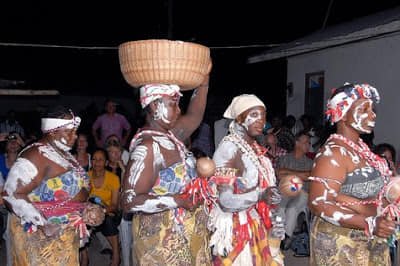
The Winti thus materialized are honoured and placated by certain things and substances connected to them, such as water, perfume, cigars, alcoholic and non-alcoholic beverages, different kinds of food, and plants.


This Afro-Surinamese religious system being during the time of the Dutch trans-Atlantic slave trade and chattel slavery (1623 –1863).
Due to the great cultural disparities among the enslaved Africans tribes, Winti has roots in a number of West African religious traditions, including the previously mentioned Vodun, Yoruba, and Akan-Fanti faiths from Ghana.Previously it was illegal for the Africans to practice the Winti religion.

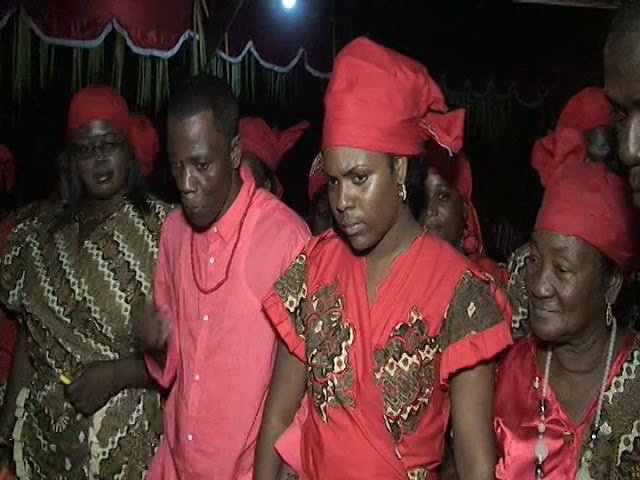
Christianity was therefore the only mandated religion for them.However,the African ancestors frequently practiced behind closed doors. Nevertheless, it was a feature of plantation life during the slavery era. A statute passed in 1874 forbade the practice of Winti, and this wasn’t abolished until
1971.
 The Black Tower