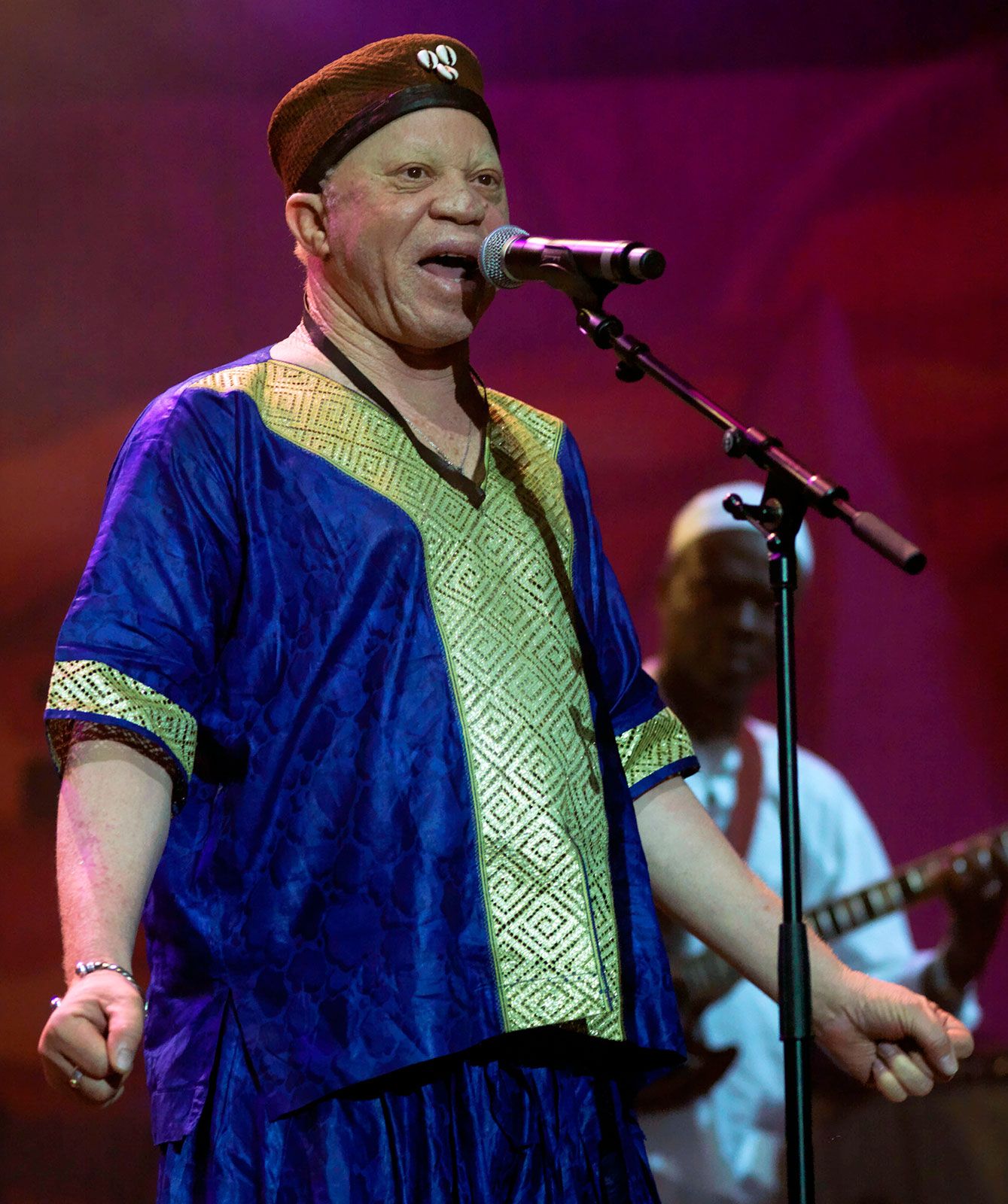
Salif Keta, known as the “Golden Voice of Africa,” is a Malian singer and songwriter who was born on August 25, 1949. He is known for pioneering the Afropop dance music genre through the fusing of elements in a variety of regional African music, particularly Mande music cultures, with jazz, rhythm and blues, and other international popular music forms.
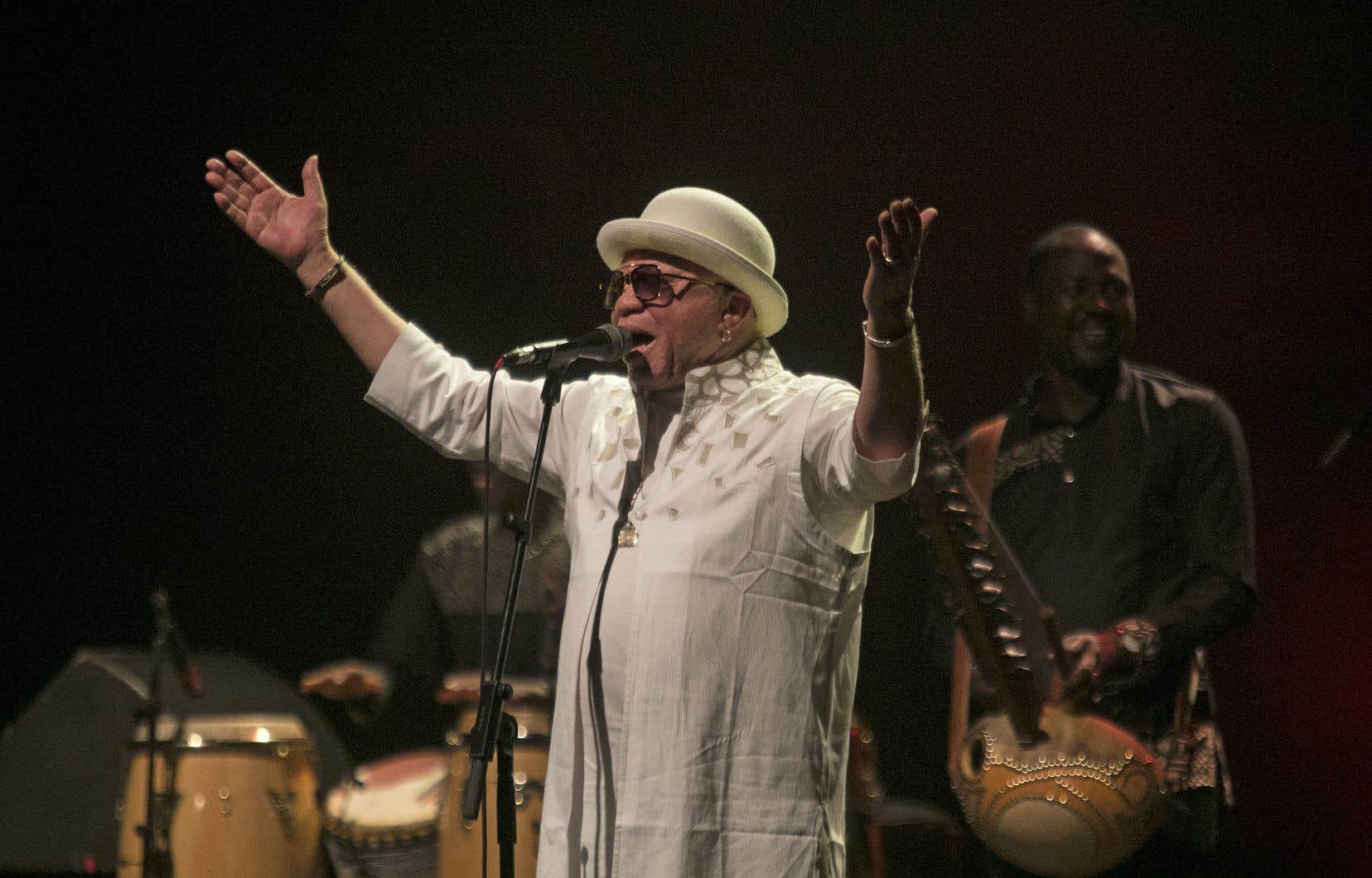
Though a direct descendant of Sundiata Keita, who established the Mali empire, Salif Keita was shunned by his neighbors and exiled by his family because he was born with albinism, which is considered a curse in Mandinka tradition.
He joined the Super Rail Band de Bamako, a band supported by the government, after moving to Bamako the Malian in his teenage years. He joined Les Ambassadeurs at the beginning of the 1970s, fleeing Mali with them during a time of upheaval, and built a solid reputation as an appealing live act as they toured different regions of Africa. Keita relocated to Paris in the 1980s, where he used a variety of instruments, including saxophones, koras, djembes, and balafons, to combine the rhythmic music of his West African heritage with European influences.

He later rose to prominence as one of the first African music singers who contributed to the spread of world music throughout Europe and America, despite facing criticism for his glitzy productions in some areas. After recording his critically praised Mouffou album in Mali again, Keita built his own studio to record his 2005 album M’Bem.

Salif Keita is currently regarded as one of Africa’s most influential and respected musicians. The most common moniker for him is “The Golden Voice of Africa.”.
Africa (1995), Madan (2002), Yamore (2002), Tomorrow, Yay Boy, and Tonto are a few of his creations.
 The Black Tower